
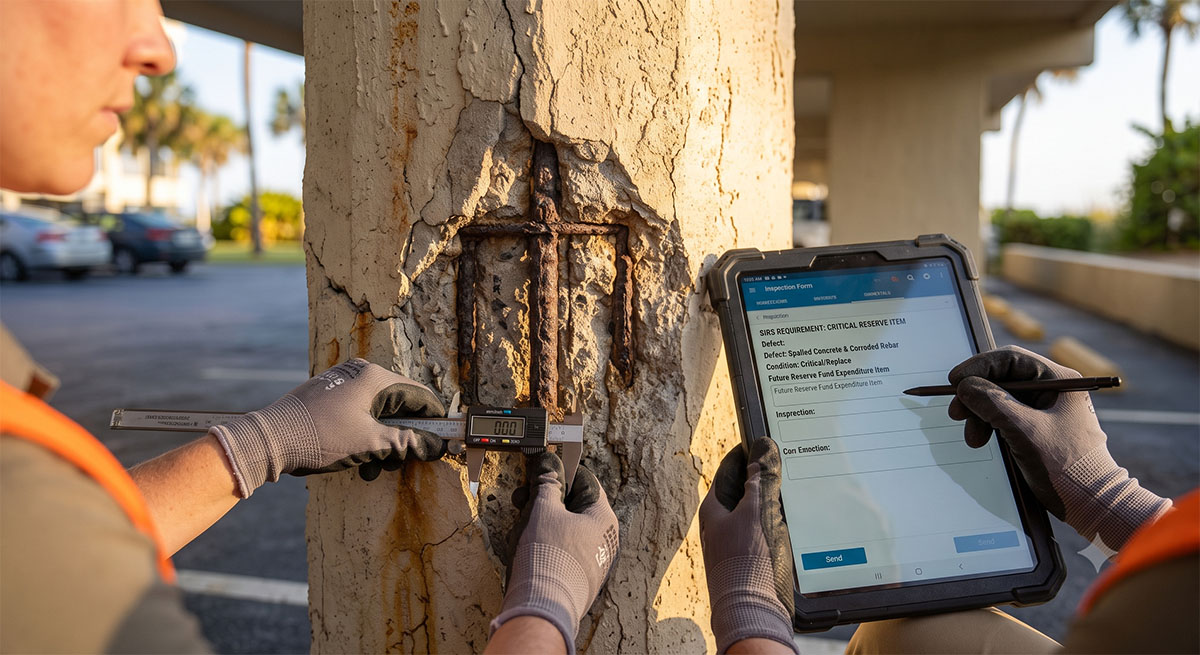
Florida SIRS requirements have become one of the most consequential compliance obligations facing condo and co-op boards. A structural integrity reserve study is not an inspection. It is a financial planning document that determines how much the association must set aside, by law, to fund the structural components of the building. Getting it wrong, or ignoring it, creates budget shortfalls that boards cannot vote their way out of.
This guide covers what a SIRS is, which buildings must comply, the specific components the study must address, current deadlines, and what to do once the report arrives. If your board also needs to understand the milestone inspection side of the equation, the combined SIRS and milestone inspection guide covers both requirements together.
What Is a Structural Integrity Reserve Study?
A structural integrity reserve study is a reserve analysis focused specifically on the structural and life-safety components of a condominium or cooperative building. It is required under Florida Statute 718.112(2)(g), established by SB 4-D in 2022 and updated most recently by HB 913, effective July 1, 2025.
A SIRS is a financial planning document, not an engineering inspection. It includes a visual assessment of each required component, an estimate of remaining useful life, and a funding schedule that calculates how much the association needs to reserve each year to cover future repairs and replacements. The distinction from a traditional reserve study matters: a standard reserve study covers all common-element components (pools, elevators, painting, paving). A SIRS in Florida narrows the scope to the structural components defined in the statute and carries funding rules that are significantly stricter.
Which Buildings Must Complete a SIRS?
Condominiums and cooperatives with buildings three or more habitable stories in height must complete a SIRS. The association, not the individual unit owners, is responsible for commissioning and funding the study. This requirement applies under Chapter 718 (condominiums) and Chapter 719 (cooperatives).
HOA communities governed by Chapter 720 are not subject to the SIRS mandate, though they remain subject to standard reserve study requirements and may benefit from similar structural planning. If your board is unsure whether your building meets the three-story habitable threshold, particularly for buildings with ground-floor parking, consult the association's legal counsel. HB 913 clarified that "habitable stories" refers to floors used for living, sleeping, eating, or cooking, which means non-residential levels may not count.
What a SIRS Must Cover
Florida SIRS requirements specify eight structural component categories that every qualifying study must address. Each category represents a line item in the association's reserve fund that the board is legally responsible for funding.
| Component | What Boards Should Know |
|---|---|
| Roof | Typically the largest single line item. Compare the SIRS estimate to your current roof reserve allocation. |
| Load-bearing structure | Includes walls, columns, foundations, slabs, and beams. Repairs in this category are often the most expensive and the least visible until they become urgent. |
| Fireproofing and fire protection | Covers sprinkler systems, standpipes, and structural fireproofing. Replacement costs are frequently underestimated in older buildings. |
| Plumbing | Main supply and waste lines serving the building. Aging risers in coastal buildings are a common SIRS finding. |
| Electrical systems | Main panels, switchgear, and distribution wiring. Electrical infrastructure upgrades often coincide with other capital projects, so timing matters. |
| Waterproofing and exterior painting | Protects the structure from water intrusion. In Florida's climate, waterproofing failures accelerate deterioration of nearly every other component on this list. |
| Windows and exterior doors | Included only when maintained by the association. Check your governing documents to confirm responsibility. |
| Other items exceeding $25,000 | A catch-all for any component whose failure affects structural integrity. HB 913 raised this threshold from $10,000 to $25,000, indexed to inflation. |
The SIRS must produce a baseline funding plan that keeps the reserve cash balance above zero throughout the funding period. This is what makes the study a budget tool, not just a compliance filing. If the plan shows a shortfall, the board must address it in the next annual budget.
Deadlines and the No-Waiver Rule
The general SIRS deadline in Florida was December 31, 2025 for most existing associations with qualifying buildings. Associations with a milestone inspection due on or before December 31, 2026 may complete the SIRS simultaneously, with an absolute deadline of December 31, 2026. After the initial study, the SIRS must be repeated every 10 years.
The more significant change is the no-waiver rule. Under current law, boards can no longer vote to waive or reduce reserve funding for SIRS components. For budgets adopted on or after December 31, 2024, the annual budget must include full funding for all eight structural component categories identified in the study. SIRS reserves must be tracked separately and cannot be redirected to non-structural expenses. This is a fundamental shift. Before these reforms, many Florida condo boards routinely voted to waive full reserve funding, deferring maintenance costs and keeping assessments artificially low. That option no longer exists for the structural components covered by the SIRS.
For boards that have not yet adjusted their budgets, the practical impact is straightforward: assessments will need to reflect what the SIRS study says the building actually costs to maintain. Boards that phase in increases early have more flexibility. Boards that wait face larger, more abrupt adjustments, or worse, a special assessment. The DBPR condominium inspections portal is the state's official reference for current requirements.
What to Do When the SIRS Report Arrives
The SIRS report is a planning tool, not a filing obligation. Boards that treat it as a one-time compliance task are the ones that end up facing emergency special assessments when a structural component reaches the end of its useful life.
Once the report is in hand, the board should take three steps.
First, review the findings with the association's management team and reserve specialist. The study will include estimated remaining useful life for each component and a recommended funding schedule. Understanding where the gaps are, and how large they are, is the foundation for every decision that follows.
Second, incorporate the SIRS component costs into the next annual budget. Under Florida's SIRS funding requirements, the reserve allocations from the study must be reflected in the association's budget. If the current assessment level does not support the required funding, the board must determine how to close the gap: phased assessment increases, a special assessment, or a line of credit. Each option requires proper board or membership approval.
Third, develop a capital project timeline for any components approaching the end of their useful life. If the SIRS identifies a roof with five years of remaining life or a plumbing system nearing failure, the board needs a plan for when and how those projects will be executed. Coordinating between the reserve study, the engineering recommendations, legal counsel, and the annual budget is where competent management makes the difference between a controlled process and a crisis.
Frequently Asked Questions
What is a SIRS report in Florida?
A SIRS report is a reserve study that specifically addresses the funding requirements for structural components of a Florida condominium or cooperative building. It is required by law under Florida Statute 718.112(2)(g) and differs from a traditional reserve study in scope: it covers only the eight structural categories defined in the statute and carries mandatory funding rules that cannot be waived by a membership vote.
How often are SIRS required in Florida?
A SIRS must be completed at least every 10 years. The board is responsible for ensuring the study stays current and that its findings are reflected in each annual budget. If structural conditions change significantly between studies, or if the association completes major capital work that affects reserve projections, an updated SIRS may be warranted sooner.
Can a Florida condo board waive SIRS reserve funding?
No. For budgets adopted on or after December 31, 2024, boards cannot vote to waive or reduce funding for SIRS components. This applies specifically to the eight structural categories identified in the study. Non-structural reserve items (painting, paving, amenity replacement) may still be subject to waiver by membership vote, but the SIRS components are protected.
What is the difference between a reserve study and a structural integrity reserve study?
A traditional reserve study covers all common-element components the association is responsible for maintaining: pools, elevators, roofing, painting, paving, landscaping, and more. A structural integrity reserve study focuses specifically on the eight structural components defined by Florida law. An association may need both. The SIRS is the one with mandatory, non-waivable funding requirements.